There is no single "better" regime. The right one depends on your deductions. Here is a simple way to compare with your own numbers.
By DocConvertPRO Editorial Team3 min read
Every year, salaried taxpayers face the same question: should I choose the new tax regime or stay with the old one? The answer depends on how many exemptions and deductions you actually use. There is no universal winner, and slabs and rebates change from time to time, so the safest method is to compare using your own numbers.
General information only. Check current slabs and rules on the official income tax website or with a tax professional before you decide.
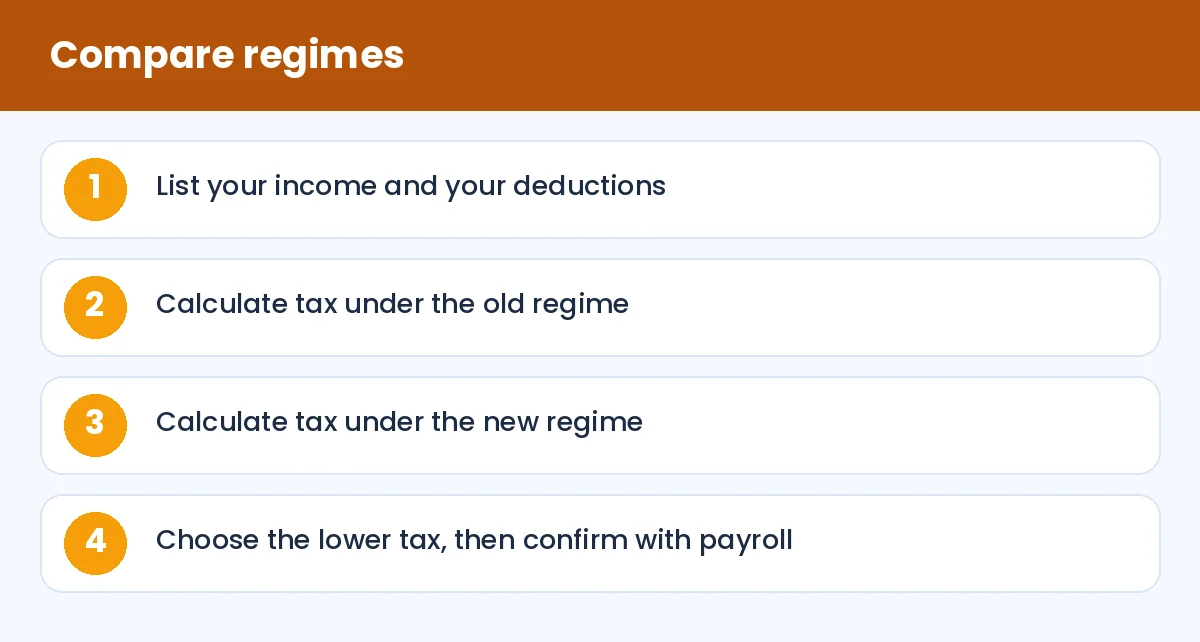
Income Tax: How to Compare the New and Old Regime: Compare regimes (infographic)
The basic idea
The old regime has higher slab rates but allows many exemptions and deductions, such as HRA, home loan interest and investments under Section 80C and related sections.
The new regime has lower slab rates and a higher rebate threshold but allows very few deductions. It rewards people who do not use many of them.
Step 1: collect your numbers
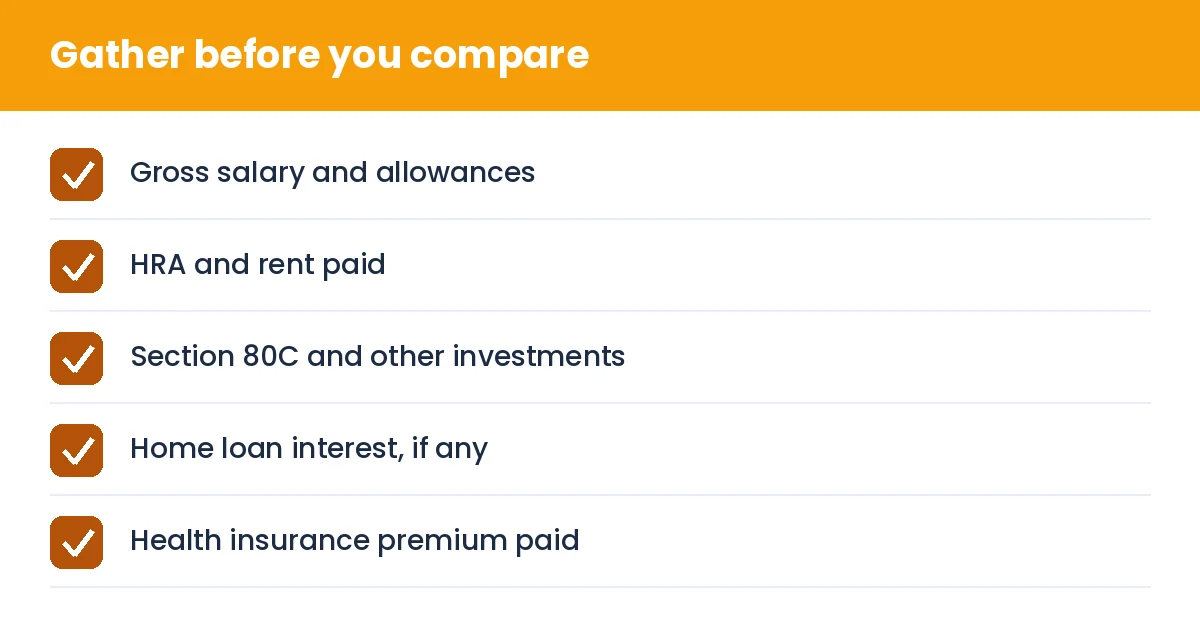
Gather your salary break-up, HRA received and rent paid, investments such as PPF, ELSS and life insurance, health insurance premiums, home loan interest, and any other deduction you can legally claim. Your payroll portal or Form 16 from last year is a good start.
Step 2: calculate both
Use the income tax calculator to compute tax under each regime. Enter the same gross income in both and add deductions only for the old regime. Compare the final tax numbers. Do not forget cess and any surcharge that applies.
Step 3: look at the break-even
If your total deductions are small, the new regime usually gives lower tax. If your deductions are large, for example you pay significant rent, have a home loan and use your full 80C limit, the old regime can win. The point where both are equal is the break-even level of deductions. Calculate it for yourself instead of relying on rules of thumb.
HRA and home loans
HRA exemption can change the result a lot for people paying high rent. See our explanation of how HRA exemption works. For home loan interest, the EMI calculator shows how much of your payment is interest each year.
Do not choose a regime just for the investments
Investing only to save tax can lead to poor decisions. Keep money in products that fit your goals and time horizon. Our SIP vs lumpsum guide and the FD vs PPF comparison can help you think about investing separately from tax.
Tell your employer, and revisit every year
Employers need your regime choice to deduct tax each month. You can usually change your choice when filing your return, subject to the rules for your situation. Your income, deductions and the rules themselves change, so redo the comparison every year.
Keep records
Retain rent receipts, investment proofs, loan interest certificates and insurance receipts. Even if you choose the new regime, good records protect you if your situation changes.
Income Tax: How to Compare the New and Old Regime: Gather before you compare (checklist)
Summary
Compare with real numbers, use a calculator, check the latest rules and decide on the lower tax for your situation. If your finances are complex, a chartered accountant is worth the fee.